
Today’s talk was about beekeeping.
Chris Martin writes
Wednesday 26th February 2025.
Busy Bees helping to improve the quality of life of those people needing the care and support of the Rowcroft Hospice in Torquay.
There are a great many people in and around the Torbay area who very kindly give of their time, and many others who donate items of theirs, both of these kind acts are intended to help raise funds for the Rowcroft Hospice in Torquay. This being in order that this very valuable Hospice can continue to be able to offer ‘end of life’ care, support, and dignity to those when a medical cure is not an option open to them.
But, whilst you might think that I might be referring to all these kind people as ‘busy bees’ (which they are of course), what I’m actually referring to with this title, is actual ‘honey bees’ (the stinging insects), because, these busy little things also generate quite a lot of money per year, which is then added to the funds needed to operate by this hospice (something I personally didn’t know about, and I expect neither did many of our members).
Our very own Mr Tony Taft will further explain in his write up on the talk given to us by Mr Alan Rowse “A Year in the Life of a Bee Keeper”.
Tony Taft writes:-
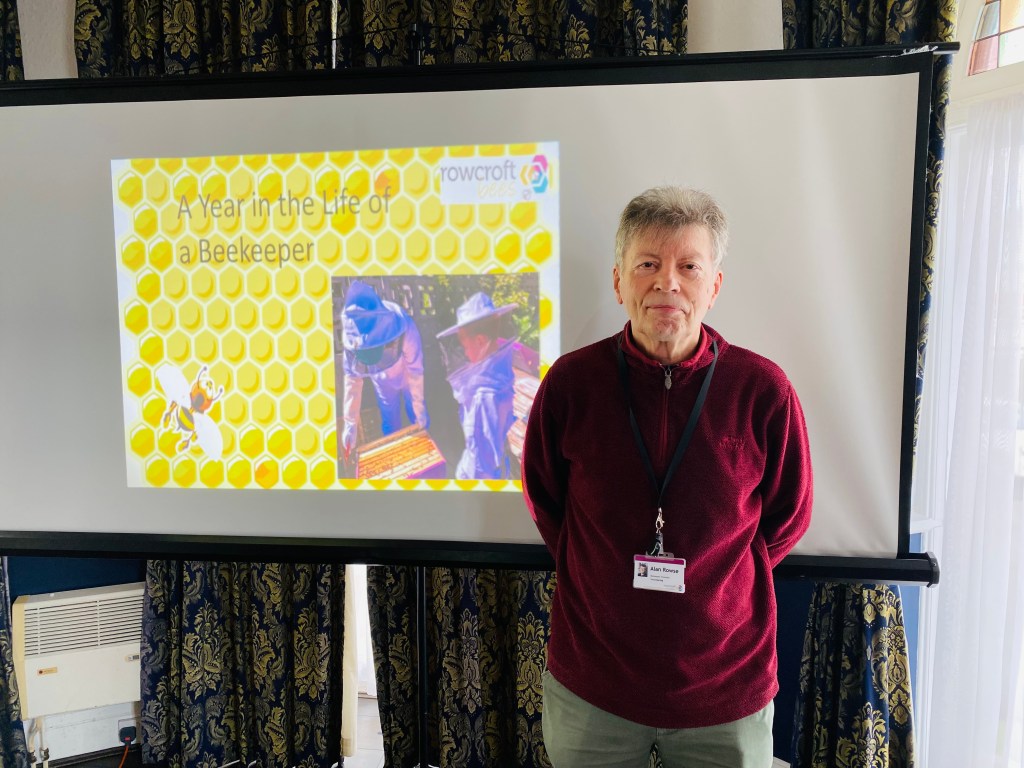
Today’s presentation was entitled “ A year in the life of a Bee keeper “ or to give it the official name “apiculture” the practice of caring for Bee colonies, our speaker was Alan Rowse who is one of the team of keepers that look after the Bee hives in the grounds of Rowcroft Hospice.
At present Rowcroft have eighteen hives in their care and produce and sell honey with the proceeds going to help the hospice continue to care for their guests.

We were told that honey can be used in medical situations like coughs, wounds and infections, honey has antibacterial, antioxidant and anti- inflammatory properties and has been used for thousands of years.
People have been collecting honey since 6000 BC according to cave paintings found in Spanish caves, but it is not until 3,100 BC that there is evidence that people were bee keeping in Egypt.
Alan told us that in parts of the world, I think he mentioned Ukraine, that with the use of a drone, flower seeds are scattered over the mine fields too dangerous to go there, but the bees can collect the pollen from these areas, the honey produced and is sold under the brand name “ Mine field honey “ but Alan said he didn’t think it is sold in this country.
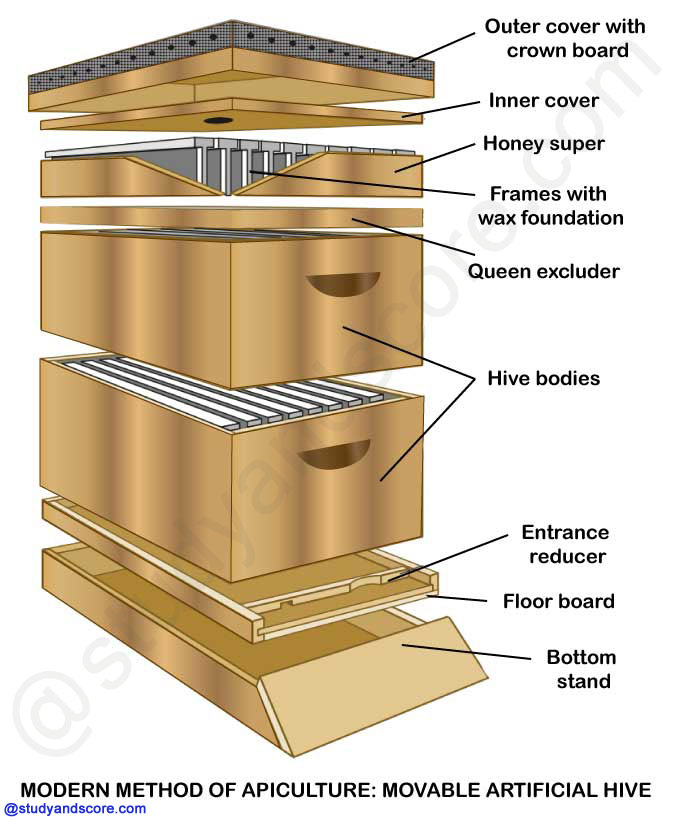
Alan went into great detail about how a bee hive works, and said that the average hive can have between fifty to sixty thousand bees in each hive.
This was a lively meeting with lots of questions being asked during Alan’s presentation, usually we wait to end of a presentation but in this case Alan did not seem to mind, and I think he quite enjoyed the interaction with our members, prompting him to give us more information than he might have.
Alan said that putting the honey in jars was a very sticky process.
We all enjoyed this presentation and thank Alan and his team for all the work they do to help look after the bees, without bees we would probably not survive, if plants can not be pollinated we would not have food on table.

 Paignton Probus Club